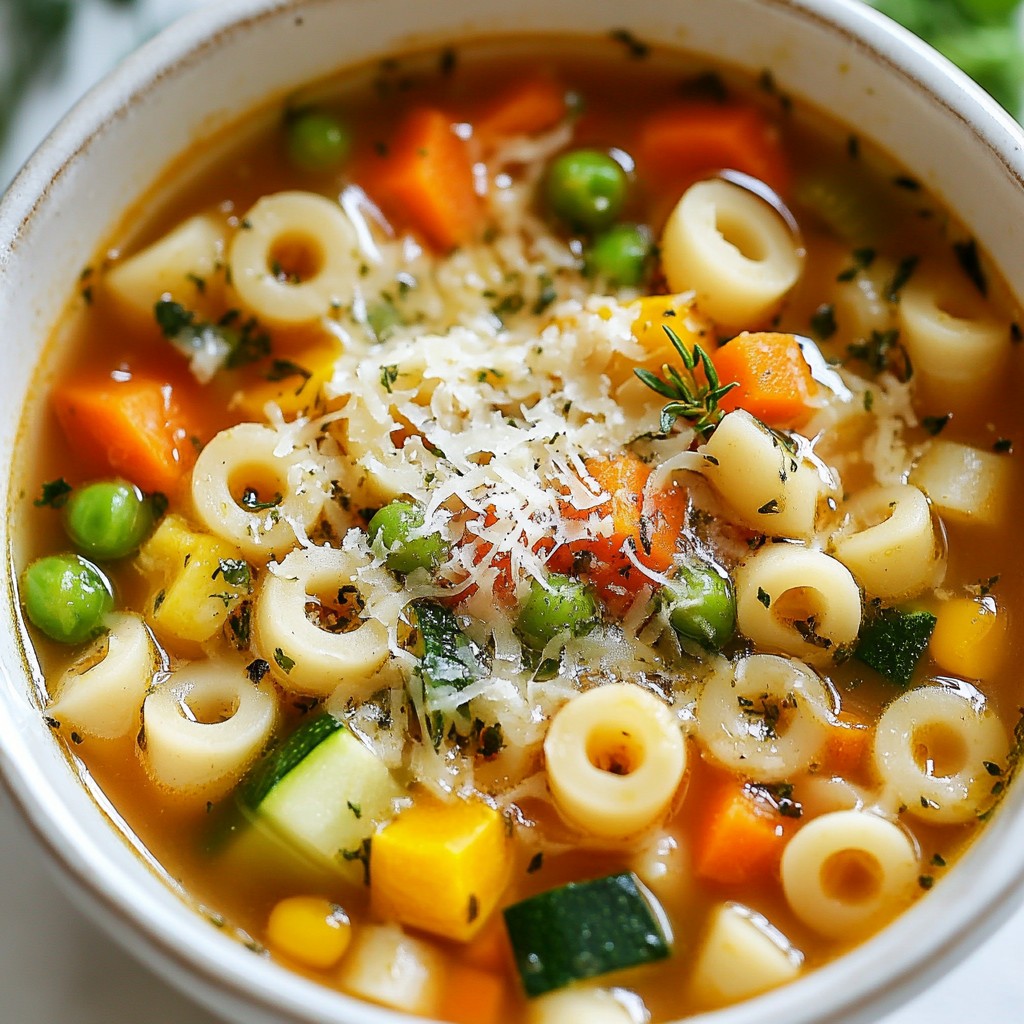
Looking for a warm, hearty meal that’s also good for you? My Veggie-Packed Minestrone Soup is just the answer. With a mix of fresh vegetables and spices, this soup is loaded with flavor and nutrients. You can easily customize it based on what you have at home. Let’s dive into how to create this delicious dish that’s perfect for any time of year!
Why I Love This Recipe
- Healthy and Nutritious: This minestrone soup is loaded with veggies, making it a perfect way to get your daily dose of nutrients.
- Customizable: You can easily swap in your favorite vegetables or beans, making this recipe adaptable to your taste preferences.
- Comforting and Filling: The combination of pasta and beans provides a hearty and satisfying meal that warms you up.
- Quick and Easy: With a prep time of just 15 minutes, this soup is perfect for a busy weeknight dinner.
Ingredients
Essential Ingredients for Veggie-Packed Minestrone Soup
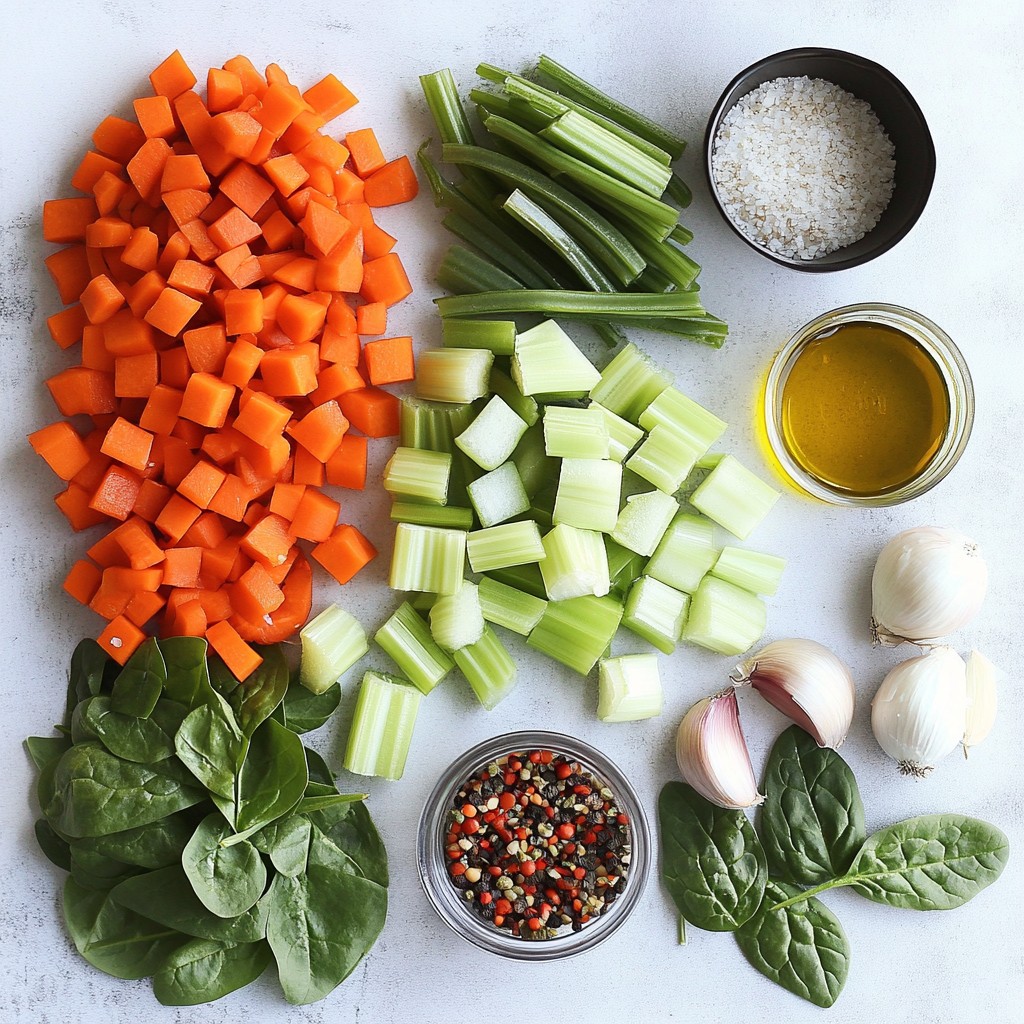
To make this veggie-packed minestrone soup, you need some key ingredients. Here’s what you’ll need:
- 2 tablespoons olive oil
- 1 medium onion, chopped
- 2 cloves garlic, minced
- 2 medium carrots, diced
- 2 celery stalks, diced
- 1 zucchini, diced
- 1 cup green beans, trimmed and cut into bite-sized pieces
- 1 cup spinach leaves, roughly chopped
- 1 can (14 oz) diced tomatoes (with juice)
- 4 cups vegetable broth
- 1 can (15 oz) cannellini beans, rinsed and drained
- 1 teaspoon dried oregano
- 1 teaspoon dried basil
- Salt and pepper to taste
- 1 cup small pasta (like ditalini or macaroni)
- Grated Parmesan cheese for serving (optional)
These ingredients form a hearty base for a warming soup. Each vegetable adds flavor and texture. The beans give protein, while the pasta makes it filling.
Optional Ingredients for Enhanced Flavor
You can add more to boost the taste of your soup. Here are some optional ingredients:
- Bay leaves for depth
- Fresh herbs like parsley or thyme
- A squeeze of lemon juice for brightness
- Red pepper flakes for heat
Adding these can take your soup from good to great. Feel free to mix and match based on your taste.
Nutritional Benefits of Featured Ingredients
This minestrone soup is not only tasty but also healthy. Here’s a quick look at the benefits:
- Olive oil: Healthy fats that can lower heart disease risk.
- Vegetables: Packed with vitamins and fiber. Carrots, celery, and spinach boost immunity.
- Cannellini beans: High in protein and fiber, helping to keep you full.
- Zucchini: Low in calories and rich in water, great for hydration.
- Tomatoes: High in antioxidants like lycopene, good for heart health.
These ingredients work together to create a meal that is both satisfying and nutritious. Enjoying this soup can help you feel good inside and out.
Step-by-Step Instructions
Sautéing the Aromatics
Start by heating 2 tablespoons of olive oil in a large pot over medium heat. Once the oil is hot, add 1 medium chopped onion. Sauté for about 2-3 minutes until the onion turns soft and clear. Next, stir in 2 minced garlic cloves and cook for 1 more minute. This step fills your kitchen with a wonderful aroma.
Cooking the Vegetables
Now it’s time to add some color. Toss in 2 diced medium carrots and 2 diced celery stalks. Cook these veggies for about 5 minutes, stirring often. They should start to soften. Then, add 1 diced zucchini and 1 cup of green beans cut into small pieces. Cook this mix for another 4-5 minutes. Finally, add 1 cup of roughly chopped spinach, 1 can of diced tomatoes with juice, 4 cups of vegetable broth, and 1 can of rinsed and drained cannellini beans. Don’t forget to sprinkle in 1 teaspoon each of dried oregano and dried basil. Season with salt and pepper to your taste.
Simmering the Soup and Cooking the Pasta
Bring the whole pot to a boil. When it starts bubbling, reduce the heat to low and let it simmer for about 15 minutes. This allows all the flavors to blend together nicely. After that, add 1 cup of small pasta, like ditalini or macaroni. Cook the pasta according to the package instructions, usually around 8-10 minutes. Stir occasionally to keep it from sticking. Once everything is cooked, taste the soup and adjust the seasoning if needed. Now you can serve it hot, topped with grated Parmesan cheese if you like!
Tips & Tricks
How to Perfectly Season Your Soup
To season your soup well, start with a good base. Use fresh herbs like oregano and basil. These herbs bring out great flavors. Remember to taste as you go. Add salt and pepper slowly. This way, you avoid making it too salty. A squeeze of lemon juice at the end can also brighten flavors.
Cooking Tips for Al Dente Pasta
For perfect pasta, cook it separately in salted water. Follow the package instructions closely. When the pasta is just firm, drain and add it to the soup. This keeps the pasta from overcooking in the soup. If you add it too early, it may become mushy. Stir it in gently to combine everything.
Storing Leftovers for Maximum Freshness
Store leftover soup in airtight containers. Let the soup cool before sealing it. This step helps prevent moisture buildup. Keep it in the fridge for up to a week. If you want to keep it longer, freeze it. Just remember to leave space in the container for expansion. When ready to eat, thaw and reheat gently on the stove.
Pro Tips
- Fresh Herbs: For the best flavor, use fresh basil and oregano instead of dried. Add them at the end of cooking to preserve their vibrant taste.
- Veggie Variations: Feel free to customize the soup with your favorite vegetables or whatever you have on hand. Bell peppers, kale, or sweet potatoes make great additions!
- Pasta Cooking: To avoid mushy pasta, cook it separately and add it to each bowl just before serving. This keeps it perfectly al dente.
- Flavor Boost: For an extra depth of flavor, add a splash of balsamic vinegar or a teaspoon of pesto just before serving.
Variations
Substitutions for Common Allergens
If you have allergies, you can still enjoy this soup. For those allergic to gluten, choose gluten-free pasta. Quinoa or rice also works well in place of pasta. If you're sensitive to beans, try using lentils or chickpeas instead of cannellini beans. For dairy allergies, skip the Parmesan cheese. Nutritional yeast can add a cheesy flavor without dairy.
Seasonal Vegetable Options
Minestrone is all about fresh veggies. In spring, try adding peas or asparagus. Summer is perfect for bell peppers or corn. In the fall, replace zucchini with butternut squash or pumpkin. Winter calls for heartier greens like kale or collard greens. Use whatever is fresh and in season for the best taste.
Vegan and Gluten-Free Adaptations
Making this soup vegan is easy. Just omit the Parmesan cheese. Ensure the vegetable broth is vegan, as some contain animal products. For a gluten-free version, use gluten-free pasta and check the broth label. You can still enjoy a hearty meal without any gluten or animal products.
Storage Info
Proper Storage Techniques for Minestrone Soup
To keep your veggie-packed minestrone soup fresh, store it in a sealed container. Glass or plastic containers work well. Let the soup cool down to room temperature before sealing it. This helps prevent condensation, which can make the soup watery. Store the soup in the fridge for up to three to four days.
Reheating Guidelines for Best Results
When you’re ready to enjoy your soup again, reheat it on the stove for the best flavor. Pour the soup into a pot and heat over medium heat. Stir it often to ensure even heating. You can also use a microwave. Place the soup in a microwave-safe bowl, cover it loosely, and heat for 2-3 minutes. Stir halfway through to avoid cold spots.
Freezing Tips for Longer Shelf Life
If you want to store your soup for longer, freezing is a great option. Use freezer-safe containers or bags. Leave some space at the top of the container for expansion. Label each container with the date. You can freeze the soup for up to three months. When you’re ready to eat it, thaw it overnight in the fridge before reheating. This keeps the flavors fresh and delicious.
FAQs
Can I make Veggie-Packed Minestrone Soup in a Slow Cooker?
Yes, you can make this soup in a slow cooker. Start by sautéing the onion and garlic in a pan. This adds great flavor. Then, add all the veggies, beans, broth, and herbs to the slow cooker. Cook on low for 6-8 hours or on high for 3-4 hours. Add the pasta about 30 minutes before serving. This way, it cooks just right and stays firm.
How can I make this soup spicier?
To add spice, try these tips:
- Add red pepper flakes to the pot when cooking.
- Use a spicy variety of canned tomatoes.
- Stir in a dash of hot sauce before serving.
These options let you control the heat to your taste.
What to serve with Minestrone Soup?
Minestrone soup pairs well with several sides:
- Crusty bread or baguette for dipping.
- A simple green salad for a fresh touch.
- Grated Parmesan cheese on top for extra flavor.
These sides make your meal more filling and enjoyable.
This blog post covered how to make veggie-packed minestrone soup. We discussed key ingredients and their health benefits. Next, I shared simple steps for cooking your soup and pasta. I provided tips for the best flavor and to keep leftovers fresh. You learned about variations for allergens and seasonal veggies. Finally, we explored storage methods, reheating, and answering common questions.
With this guide, you can create a tasty, healthy soup every time. Enjoy your cooking!