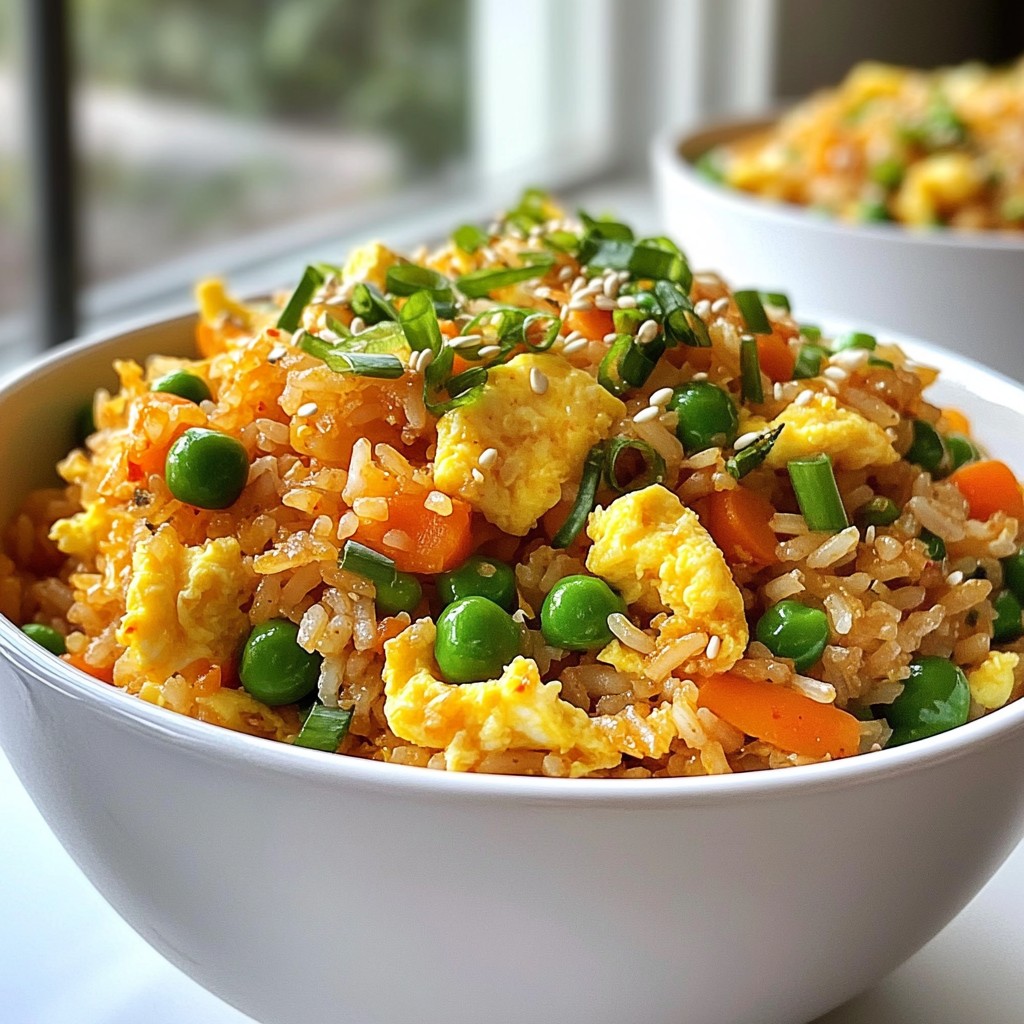
Are you ready to elevate your meal game? Spicy Kimchi Fried Rice is a bold, easy dish bursting with flavor. Using simple ingredients like cooked rice, kimchi, and a few seasonings, you’ll have a satisfying meal in no time. Perfect for a quick weeknight dinner or an exciting lunch! Join me as we explore how to make this tasty recipe that anyone can enjoy. Let's get cooking!
Why I Love This Recipe
- Quick and Easy: This dish comes together in just 20 minutes, making it perfect for busy weeknights.
- Flavor Explosion: The combination of kimchi, gochujang, and sesame oil creates a deliciously spicy and savory flavor profile.
- Customizable: You can easily add your favorite proteins or vegetables to make it your own.
- Leftover Friendly: It's a great way to use up leftover rice and vegetables, minimizing food waste.
Ingredients
Main Ingredients
- 2 cups cooked rice
- 1 cup kimchi
- 1/2 cup green onions
- 1/2 cup frozen peas and carrots
- 2 eggs
- 1 tablespoon vegetable oil
Seasonings and Oils
- 2 tablespoons soy sauce
- 1 tablespoon sesame oil
- 1 tablespoon gochujang
- Salt and black pepper
Garnishes
- Sesame seeds
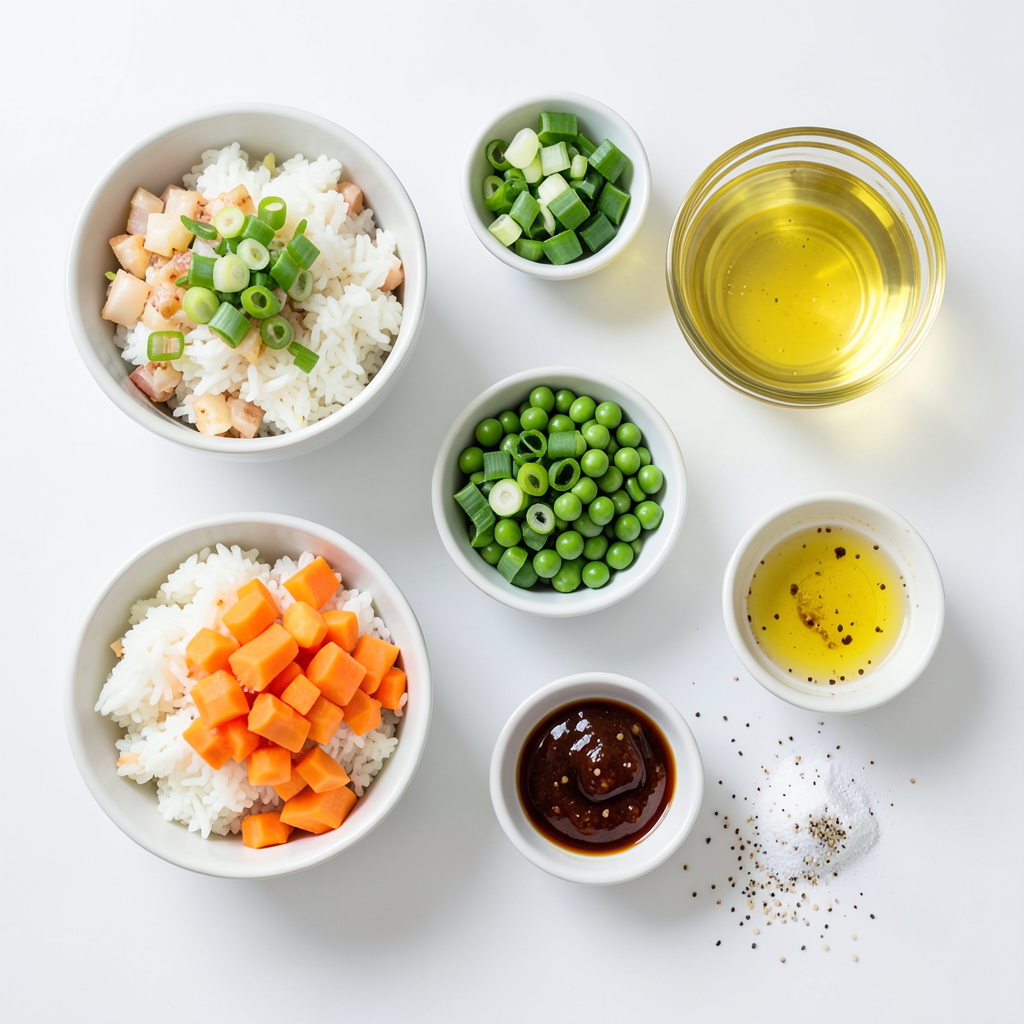
The main ingredients for Spicy Kimchi Fried Rice are simple yet packed with flavor. I like using day-old rice because it fries better. Fresh rice can turn mushy. The kimchi gives the dish a spicy kick. You can use any kind of kimchi. I prefer the kind with cabbage for the crunch. Slicing green onions adds a fresh taste. Peas and carrots give color and sweetness. The eggs bring richness and help bind everything.
For seasonings, soy sauce adds depth. Gochujang gives it that spicy, fermented taste. Sesame oil provides a nutty aroma. Don’t forget salt and black pepper for balance.
Finally, sprinkle sesame seeds on top for a nice finish. This adds a bit of crunch and visual appeal. Each ingredient plays a key role in making this dish delicious and satisfying.
Step-by-Step Instructions
Preparation Overview
Using day-old rice is key for fried rice. Fresh rice is too sticky and wet. Day-old rice is dry and firm. This helps each grain stay separate. Gather all ingredients before cooking. It makes the process smooth and fast.
Cooking Process
Step 1: Heating the skillet Heat a large skillet or wok over medium-high heat. Add 1 tablespoon of vegetable oil. Let it warm up until it shimmers.
Step 2: Stir-frying the kimchi Add 1 cup of chopped kimchi to the skillet. Stir-fry it for about 2 minutes. This makes the kimchi fragrant and tasty.
Step 3: Scrambling the eggs Push the kimchi to one side of the skillet. Pour in 2 beaten eggs into the empty side. Scramble the eggs until they are fully cooked.
Combining Ingredients
Step 4: Adding rice and mixing Add 2 cups of cooked rice to the skillet. Use a spatula to break up any clumps. Mix the rice with the kimchi and eggs well.
Step 5: Mixing in sauce and vegetables Stir in 2 tablespoons of soy sauce, 1 tablespoon of sesame oil, and 1 tablespoon of gochujang. Add 1/2 cup of frozen peas and carrots. Mix everything well and let it fry for 5-7 minutes.
Step 6: Final seasoning and serving Add 1/2 cup of sliced green onions. Season with salt and black pepper to taste. Stir once more before serving hot. Garnish with sesame seeds on top.
Tips & Tricks
Best Practices
To avoid soggy rice, always use day-old rice. Fresh rice has too much moisture. When you cook it, it can clump together. Day-old rice dries out a bit, making it perfect for frying. Spread fresh rice on a tray to cool it down before using. This helps too.
Achieving the best fry texture is all about timing. Keep your skillet hot but not smoking. Stir-fry the kimchi for just a couple of minutes. Then, scramble the eggs quickly. This keeps everything light and fluffy. Mix the rice in gently, and let it sit for a moment to crisp up.
Flavor Enhancements
Adding protein can make your dish heartier. You can use tofu, chicken, or shrimp. Each adds a different taste and texture. If you add cooked chicken or shrimp, toss it in with the rice. For tofu, stir-fry it first for extra flavor.
Experiment with spice levels to make it your own. If you love heat, add more gochujang. You can also sprinkle in some chili flakes if you want. Remember, start with a little and taste as you go. This way, you control the spice!
Cooking Equipment
For the best results, use a large skillet or wok. A non-stick skillet works well, too. It helps prevent sticking and makes cleanup easier. If you have a cast-iron wok, it can hold heat better.
Essential utensils for stir-frying include a spatula and a wooden spoon. A spatula helps flip and mix the rice without crushing it. A wooden spoon is great for controlling the heat. These tools make cooking easier and more fun!
Pro Tips
- Use Day-Old Rice: Day-old rice is ideal for fried rice as it’s drier and less sticky, allowing for better separation of grains during cooking.
- Customize Your Veggies: Feel free to swap in any vegetables you have on hand, such as bell peppers, corn, or zucchini, to add variety and nutrition.
- Adjust the Spice Level: If you prefer a milder dish, reduce the amount of gochujang, or add it gradually to find your desired heat level.
- Garnish for Flavor: Enhance the dish by garnishing with chopped cilantro or a drizzle of extra sesame oil for added flavor and a fresh touch.
Variations
Customizable Ingredients
You can easily change spicy kimchi fried rice to fit your taste. Here are some ideas:
- Vegetarian adaptations: Skip the eggs or replace them with tofu. Tofu gives a nice texture.
- Adding different vegetables: Try bell peppers, broccoli, or spinach. Fresh veggies add color and crunch.
Kimchi Options
Choosing the right kimchi makes a big difference in taste. Here’s how to decide:
- Making your own kimchi: It's fun and easy! You control the spice and flavor. Just ferment cabbage with spices and garlic.
- Store-bought vs homemade: Store-bought is quick and convenient. Homemade can be fresher and more flavorful. Both work well for this dish.
Serving Suggestions
How you serve your fried rice can make it more fun. Here are some tips:
- Pairing with side dishes: Serve with pickled vegetables or a simple salad. They balance the spicy rice.
- Creative presentation ideas: Use a bowl or plate with a colorful garnish. Sprinkle sesame seeds for a nice touch. You can even shape the rice into a mound for a fun look!
Storage Info
Refrigeration
To store your leftover spicy kimchi fried rice, let it cool first. Place it in an airtight container. Make sure to remove as much air as possible. This helps keep the rice fresh. You can store it in the fridge for up to three days.
Reheating
When ready to eat, there are a few ways to heat your rice. You can use a skillet, microwave, or even an oven. If using a skillet, add a splash of water and cover it. This helps steam the rice and keeps it moist. If using a microwave, cover the bowl with a lid or microwave-safe wrap. This also helps keep moisture in.
Freezing
If you want to save it for later, you can freeze kimchi fried rice. First, let it cool down completely. Then, scoop it into freezer-safe bags. Press out any air before sealing. To thaw, move it to the fridge overnight. When ready to eat, reheat it in a skillet or microwave. This keeps the texture nice and tasty.
FAQs
What can I substitute for kimchi?
You can use pickled vegetables or sauerkraut. These options add a similar tang. If you want a fresh taste, try chopped cabbage with a bit of chili paste.
Is Spicy Kimchi Fried Rice gluten-free?
Yes, but check your soy sauce. Some brands use wheat. You can use tamari or gluten-free soy sauce instead. This keeps the dish safe for gluten-free diets.
Can I make this dish vegan?
Yes, it is easy to make it vegan. Just skip the eggs and use tofu instead. Scramble firm tofu in the skillet for protein.
How do I make the fried rice less spicy?
To lower the spice, reduce the gochujang. You can also add more rice or veggies. Mixing in a bit of sugar helps tone down the heat too.
What kind of rice is best for fried rice?
Day-old rice is best for fried rice. It is drier and less sticky. If you don't have day-old rice, cool freshly cooked rice before using it.
In this blog post, we explored how to make delicious kimchi fried rice. I shared key ingredients, step-by-step cooking instructions, and helpful tips. Keep your rice day-old for the best texture. Don’t shy away from personalizing your dish with extra protein or spices. Remember to store leftovers properly to enjoy them later. Now you have all the tools to create a mouthwatering meal that suits your taste. Dive into this recipe, and have fun in the kitchen!