
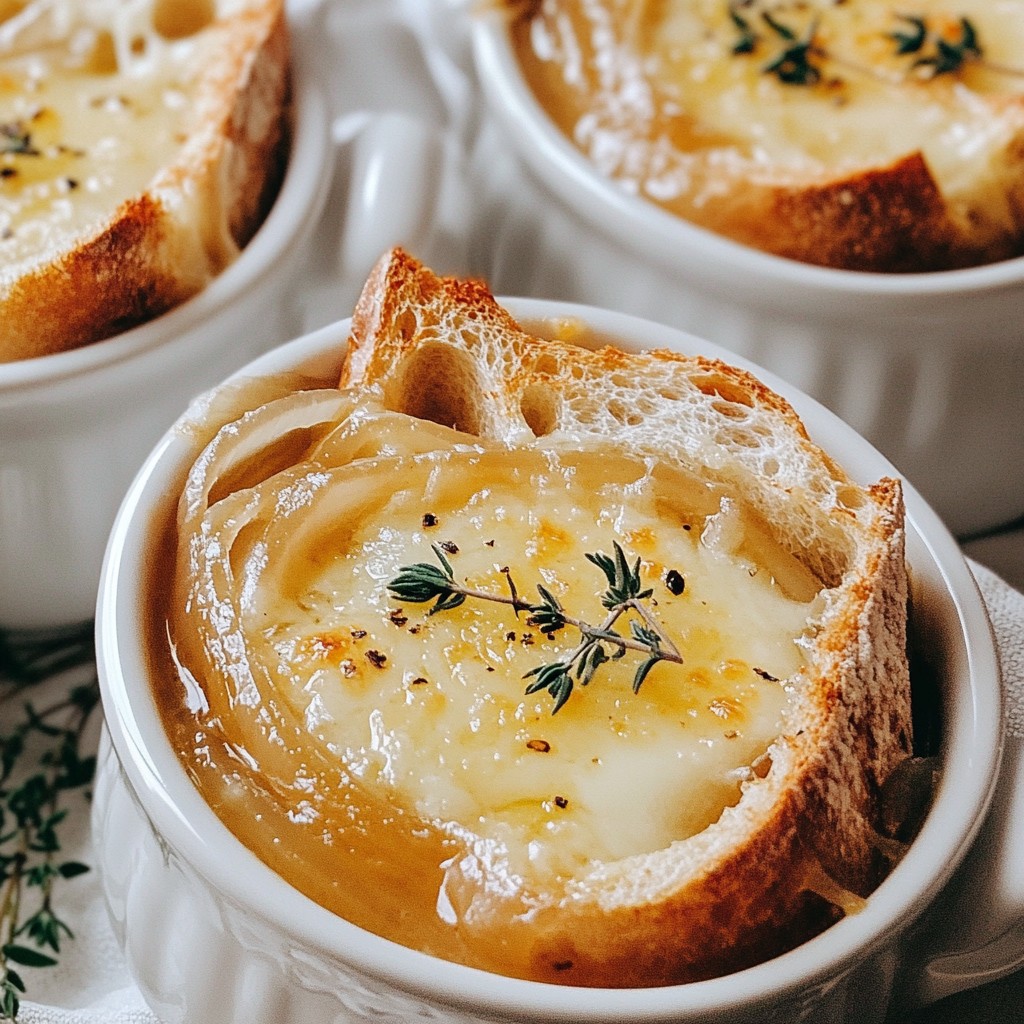
Classic French Onion Soup is a rich and tasty treat that warms your soul. I want to share my favorite recipe with you. You’ll learn how to make this classic dish step by step. From selecting fresh onions to achieving that perfect cheese melt, every detail matters. Ready to dive into this savory delight? Let’s get started and make your kitchen smell amazing!
Pourquoi J'adore Cette Recette
- Rich Flavor: The caramelization of onions creates a deep, sweet flavor that is the hallmark of classic French onion soup.
- Comforting Dish: This soup is perfect for chilly evenings, offering warmth and satisfaction in each bowl.
- Easy to Prepare: With simple ingredients and straightforward steps, this recipe is accessible for cooks of all skill levels.
- Impressive Presentation: The bubbling, golden cheese on top of the soup makes for an eye-catching and elegant dish.
Ingredients
List of Ingredients
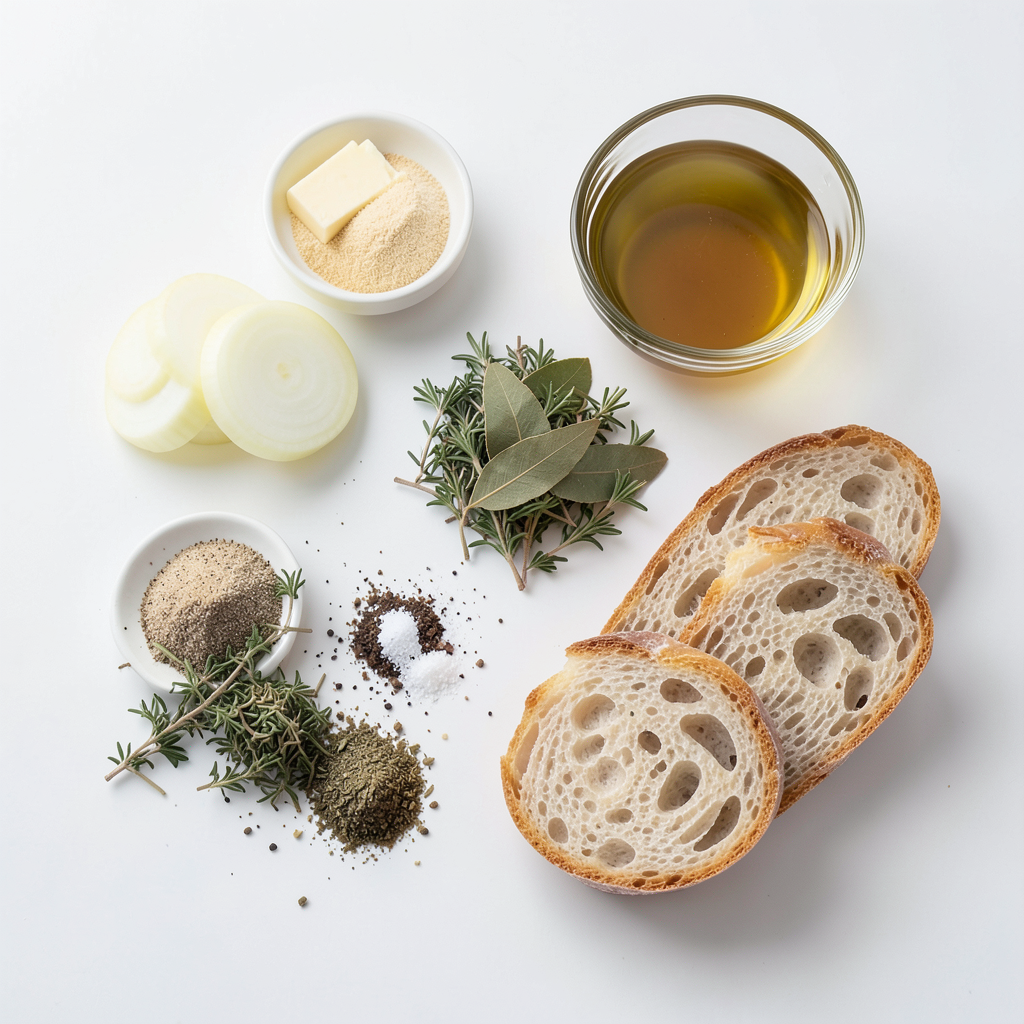
To make Classic French Onion Soup, you'll need these simple ingredients:
- 4 large yellow onions, thinly sliced
- 2 tablespoons unsalted butter
- 1 tablespoon olive oil
- 1 teaspoon sugar
- 4 cups beef broth
- 1 cup water
- 1 teaspoon dried thyme
- 1 bay leaf
- Salt and pepper to taste
- 4 large slices of crusty baguette
- 1 ½ cups Gruyère cheese, grated
Ingredient Substitutions
You can swap some ingredients if needed. Use vegetable broth for a vegetarian option. For the cheese, Swiss or mozzarella works well too. If you lack fresh onions, frozen or dried onions can work in a pinch. For a lighter soup, use less butter and oil.
Importance of Fresh Ingredients
Using fresh ingredients makes a big difference. Fresh onions caramelize better, giving the soup a rich flavor. Good-quality beef broth enhances the taste and depth. Fresh thyme adds a burst of flavor that dried herbs can’t match. Always choose the best ingredients for the best soup!
Step-by-Step Instructions
Preparing the Onions
Start by slicing the onions thin. Use four large yellow onions for the best taste. Heat a large pot over medium heat. Add two tablespoons of unsalted butter and one tablespoon of olive oil. Let the butter melt, then add the onions and one teaspoon of sugar. Stir them well. Cook slowly for about 25 to 30 minutes. You want the onions to turn a deep golden brown. This step gives the soup its rich flavor.
Cooking the Soup
Once the onions are caramelized, it’s time to add more ingredients. Pour in four cups of beef broth and one cup of water. Add one teaspoon of dried thyme and one bay leaf. Don’t forget to season with salt and pepper. Bring everything to a boil. Lower the heat and let it simmer for 20 minutes. This allows all the flavors to blend nicely.
Broiling and Serving
Preheat your broiler while the soup simmers. Take a baking sheet and place four large slices of crusty baguette on it. Toast them under the broiler for 2 to 3 minutes. You want them golden brown on both sides. After that, remove the bay leaf from the soup. Ladle the hot soup into oven-safe bowls. Place a slice of toasted baguette on top of each bowl. Sprinkle one and a half cups of grated Gruyère cheese over the bread. Now, place the bowls on the baking sheet and broil them for 3 to 5 minutes. The cheese should bubble and turn golden brown. Finally, let them cool slightly before serving. Enjoy this rich and savory delight!
Tips & Tricks
Perfecting Onion Caramelization
To make great French onion soup, you must caramelize your onions well. Start with medium heat. Add butter and olive oil to your pot. Once melted, add your sliced onions and sugar. Stir often. Cook them slowly for 25 to 30 minutes. Watch for a deep golden brown color. This step is vital. It gives your soup that rich, sweet flavor. Don't rush it. Patience pays off here.
Cheese Selection for the Best Flavor
The cheese you choose matters a lot. Gruyère cheese is the classic choice. It melts beautifully and has a nutty taste. If Gruyère is hard to find, you can use other cheeses. Emmental or Swiss cheese work well too. For a twist, try a mix of cheeses. Just ensure the cheese can melt nicely. This adds to the soup's richness.
How to Adjust Seasoning
Seasoning can make or break your soup. Start with salt and pepper. Taste your soup as it simmers. If it needs more depth, add a bit more thyme. You can also add a splash of sherry or red wine for extra flavor. Just remember to adjust slowly. Too much can overpower the sweet onion taste. Always taste before serving. This ensures a well-balanced flavor.
Pro Tips
- Caramelization is Key: Take your time with the onions! Cooking them slowly allows for maximum sweetness and flavor development.
- Quality Ingredients Matter: Use high-quality beef broth for a richer and more flavorful soup. Homemade is ideal if you have the time!
- Cheese Selection: Gruyère cheese is traditional, but you can mix in some Emmental for a different taste and texture.
- Broiler Watch: Keep a close eye on the soup while broiling. Cheese can go from perfectly browned to burnt in seconds!
Variations
Vegetarian Version
To make a vegetarian version of French onion soup, simply swap the beef broth for vegetable broth. This change keeps the soup rich but adds a lighter touch. Use a low-sodium broth for a cleaner flavor. The onions still provide a deep, sweet taste. You can also add a splash of soy sauce for an umami boost.
Adding Wine for Depth of Flavor
Adding wine to your soup can enhance its flavors. A dry white wine works best. Pour in about half a cup after caramelizing the onions. Let it simmer for a few minutes to cook off the alcohol. This step adds a layer of complexity that elevates your soup.
Alternative Cheeses and Toppings
While Gruyère is a classic choice, you can try other cheeses. Swiss cheese melts well and offers a mild flavor. For a bolder taste, use sharp cheddar or blue cheese. As for toppings, consider crispy fried onions or fresh herbs. These add texture and a pop of color to your soup.
Storage Info
How to Store Leftover Soup
To store leftover soup, let it cool first. Use an airtight container for best results. Place the cooled soup inside and seal it tightly. Store it in the fridge for up to three days. This keeps the flavors fresh and ready to enjoy again.
Freezing Tips for French Onion Soup
Freezing is a great option if you want to save some soup. Use freezer-safe containers or bags. Make sure to leave some space for expansion. Label the containers with the date. You can freeze the soup for up to three months. This way, you can enjoy a warm bowl anytime.
Reheating Best Practices
When reheating, do it slowly for the best taste. Pour the soup into a pot on low heat. Stir gently to avoid burning. If you need to, add a splash of water or broth. This helps keep it from getting too thick. Heat until it is hot all the way through. If you want, you can top it with more cheese and broil it again for that melty goodness!
FAQs
What is the origin of French Onion Soup?
French Onion Soup comes from France. It dates back to Roman times. The French made it popular in the 18th century. They used simple ingredients like onions, broth, and bread. The soup became a staple for many. It is now enjoyed worldwide, often as a comforting dish.
Can I make this soup in advance?
Yes, you can make this soup ahead of time. Cook the soup and let it cool. Store it in the fridge for up to three days. When you're ready, reheat it on the stove. You can also freeze the soup for later. Just remember to leave out the cheese and bread until serving.
How can I make it less salty?
To reduce salt, use low-sodium broth. You can also add extra water to the soup. Adding a potato can help absorb some salt. Just remove the potato before serving. Taste the soup as you go to ensure the right flavor.
What type of cheese works best for topping?
Gruyère cheese is the classic choice for French Onion Soup. It melts well and has a nutty flavor. You can also mix in some mozzarella or Swiss cheese for variety. The key is to use a cheese that melts nicely. This gives you that lovely, gooey topping that everyone loves.
This blog post covered how to make French Onion Soup. We looked at key ingredients and their swaps, plus why fresh ingredients matter. I shared step-by-step cooking instructions and tips for perfecting the soup. We also explored tasty variations and how to store leftovers.
In closing, with a few simple steps and the right ingredients, you can enjoy this classic dish. Happy cooking!