Go Back
- 1 whole turkey (12-14 pounds), thawed - 1/2 cup unsalted butter, softened - 1 tablespoon olive oil - 4 cups low-sodium chicken broth - 1 large onion, quartered - 2 carrots, chopped - 2 celery stalks, chopped - 1 lemon, halved - 1 apple, cored and quartered - 2 tablespoons fresh sage, chopped - 2 tablespoons fresh thyme, chopped - 2 tablespoons fresh rosemary, chopped - 1 tablespoon garlic powder - 1 tablespoon onion powder - Salt and pepper to taste - 1 large onion, quartered - 2 carrots, chopped - 2 celery stalks, chopped - 1 lemon, halved - 1 apple, cored and quartered The main ingredients are the backbone of your classic roast turkey. The turkey itself should weigh between 12 to 14 pounds. For a tender and rich flavor, we use unsalted butter and olive oil. The broth keeps the turkey moist while it cooks. Herbs and seasonings add depth to your dish. Fresh sage, thyme, and rosemary give the turkey a lovely aroma. Garlic powder and onion powder enhance the flavor, while salt and pepper round it out. For stuffing, we add onion, carrots, and celery. They add moisture during cooking. The lemon offers a bright flavor, while the apple adds a hint of sweetness. These ingredients make your turkey not only tasty but also a joy to carve and serve. {{ingredient_image_1}} First, you need to prep the turkey. Take the thawed turkey from its packaging. Remove the giblets from the inside. These are often in a bag. Pat the turkey dry with paper towels. You want it dry both inside and out. This helps the skin crisp up nicely. Next, let's make the herb butter. In a medium bowl, add 1/2 cup of softened butter. Pour in 1 tablespoon of olive oil. Then, add 2 tablespoons each of chopped sage, thyme, and rosemary. Also, mix in 1 tablespoon of garlic powder and 1 tablespoon of onion powder. Stir it all until combined. This mix will give your turkey loads of flavor. Now, it’s time to roast the turkey. Preheat your oven to 325°F (165°C). Gently loosen the skin of the turkey breast with your fingers. Spread half of the herb butter under this skin. Use the other half to coat the outside well. Now, season it with salt and pepper. Stuff the cavity with quartered onion, chopped carrots, chopped celery, halved lemon, and quartered apple. These will add moisture and flavor. Place the turkey on a roasting rack in a large pan. Pour 4 cups of low-sodium chicken broth into the bottom of the pan. Cover the turkey loosely with aluminum foil. Roast it in the oven for about 13-15 minutes per pound. Baste it every 45 minutes. After 2-2.5 hours, remove the foil. Roast until the breast reaches 165°F (75°C). This takes about 30-60 minutes longer. Once the turkey is done, take it out of the oven. Let it rest for at least 30 minutes. This helps the juices settle. Finally, carve the turkey and enjoy! To keep your turkey moist, start by patting it dry. This helps the skin crisp up. Next, use the herb butter mix under the skin. This adds flavor and moisture right where you need it. Stuffing the turkey with onion, carrots, celery, lemon, and apple also helps. These ingredients release moisture as they cook. Lastly, let the turkey rest after cooking. This step allows the juices to spread throughout the meat. Cooking time matters for a perfect turkey. Plan for 13 to 15 minutes per pound. For instance, a 12-pound turkey needs around 2.5 to 3 hours. Use a meat thermometer to check the thickest part of the breast. It should reach 165°F (75°C). This ensures your turkey is safe to eat and not dry. Basting keeps your turkey juicy. Every 45 minutes, spoon some pan juices over the turkey. This adds moisture to the skin and meat. Basting also helps develop a nice golden color on the outside. If you cover the turkey with foil, remove it in the last hour. This allows the skin to crisp up while keeping the meat moist. Pro Tips Resting is Key: Allow the turkey to rest for at least 30 minutes after roasting. This helps the juices redistribute, ensuring a moist and flavorful bird. Use a Thermometer: Invest in a meat thermometer to check the turkey's internal temperature. The thickest part of the breast should reach 165°F (75°C) for safe consumption. Basting for Flavor: Baste the turkey every 45 minutes with the pan juices. This adds moisture and enhances the flavor, resulting in a beautifully golden skin. Experiment with Herbs: Feel free to mix and match herbs according to your taste. Fresh herbs like parsley, oregano, or even a hint of sage can elevate the flavor profile of your turkey. {{image_2}} Brining a turkey makes it juicy and tasty. You soak it in a salty water mix. This mix can have spices and herbs. A brined turkey holds more moisture. Non-brined turkey can still be great, but it may dry out. If you choose to brine, do it for at least 12 hours. Use water, salt, and your favorite herbs for a great mix. You can change the herb butter to fit your taste. Instead of sage, thyme, or rosemary, try basil or parsley. You can even add lemon zest for a pop of flavor. Mix in crushed red pepper for some heat. The butter makes the skin crispy and adds flavor. Feel free to be creative. Each mix can give your turkey a new twist. Stuffing is a big part of the turkey meal. You can use bread, rice, or quinoa. For a twist, try a fruit stuffing with apples or cranberries. Nuts like walnuts or pecans can add crunch. Vegetables like mushrooms or bell peppers can also work well. Each stuffing choice changes the flavor of the turkey. Think about what you and your guests will enjoy. After your meal, store leftover turkey in a safe way. First, let the turkey cool to room temperature. Then, carve the turkey into pieces. Place the pieces in an airtight container. Make sure to add some of the pan juices to keep it moist. Store the turkey in the fridge. Use it within three to four days for the best taste. When it's time to enjoy those leftovers, reheat the turkey carefully. Preheat your oven to 325°F (165°C). Place the turkey pieces in an oven-safe dish. Add a splash of chicken broth or water to keep it juicy. Cover the dish with foil. Heat for about 20-30 minutes, or until the turkey is warm. This method helps keep the turkey delicious and not dry. If you have more turkey than you can eat, freezing is a great option. Wrap the turkey pieces tightly in plastic wrap. Then, place them in a freezer-safe bag or container. Label the bag with the date. You can freeze turkey for up to three months. When ready to eat, thaw it overnight in the fridge before reheating. You should cook a turkey for 13 to 15 minutes per pound. For example, a 12-pound turkey needs about 2.5 to 3 hours. Timing can change based on your oven and turkey size, so check often. A meat thermometer helps ensure safety. Always aim for 165°F in the thickest part of the breast. Your turkey is done when it reaches 165°F in the thickest part. This ensures it is safe to eat. Use a meat thermometer to check the temperature. Insert it into the breast without touching the bone. Let the turkey rest for at least 30 minutes before carving for the best flavor. Yes, you can use many herbs for the herb butter. Try parsley, dill, or oregano for a different flavor. Fresh or dried herbs work well. Mix your chosen herbs with butter and seasonings. This change can make your turkey taste unique and tasty! This guide shows how to prepare a delicious turkey dish. We covered key ingredients, step-by-step cooking methods, and tips to ensure a juicy turkey. You can explore variations to meet your taste and learn how to store leftovers properly. Use the FAQs for quick answers to common questions. I hope these insights help you create a perfect turkey meal. Enjoy the cooking process and the feast ahead!

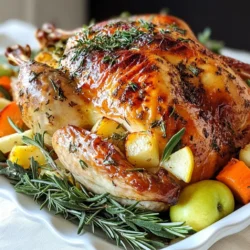
Thanksgiving Delight: Classic Roast Turkey

A traditional roast turkey recipe perfect for Thanksgiving celebrations.
Prep Time 30 minutes
Cook Time 3 hours
Total Time 4 hours 30 minutes
Course Main Course
Cuisine American
Servings 10

Ingredients
  

  • 1 whole turkey (12-14 pounds), thawed
  • 0.5 cup unsalted butter, softened
  • 1 tablespoon olive oil
  • 2 tablespoons fresh sage, chopped
  • 2 tablespoons fresh thyme, chopped
  • 2 tablespoons fresh rosemary, chopped
  • 1 tablespoon garlic powder
  • 1 tablespoon onion powder
  • to taste salt and pepper
  • 4 cups low-sodium chicken broth
  • 1 large onion, quartered
  • 2 carrots, chopped
  • 2 stalks celery, chopped
  • 1 lemon, halved
  • 1 apple, cored and quartered

Instructions
 

  • Preheat your oven to 325°F (165°C).
  • Remove the turkey from the packaging and take out the giblets. Pat the turkey dry with paper towels, both inside and out.
  • In a bowl, combine the softened butter, olive oil, chopped sage, thyme, rosemary, garlic powder, and onion powder. Mix until well combined.
  • Gently loosen the skin of the turkey breast with your fingers. Spread half of the herb butter mixture under the skin, ensuring even coverage. Rub the remaining mixture all over the outside of the turkey. Season generously with salt and pepper.
  • Stuff the cavity of the turkey with the quartered onion, chopped carrots, celery, lemon halves, and apple. This will infuse flavor and moisture during cooking.
  • Place the turkey breast-side up on a roasting rack in a large roasting pan. Pour the chicken broth into the bottom of the pan.
  • Cover the turkey loosely with aluminum foil and roast in the preheated oven. Plan for about 13-15 minutes of cooking time per pound. Baste the turkey every 45 minutes with the pan juices.
  • After about 2-2.5 hours, remove the foil and continue roasting until the internal temperature of the thickest part of the breast reaches 165°F (75°C), approximately 30-60 minutes longer.
  • Once done, remove the turkey from the oven and let it rest for at least 30 minutes before carving. This allows the juices to redistribute.
  • Carve the turkey and serve it with your favorite sides.

Notes

Let the turkey rest before carving for juicier meat.
Keyword roast, Thanksgiving, turkey